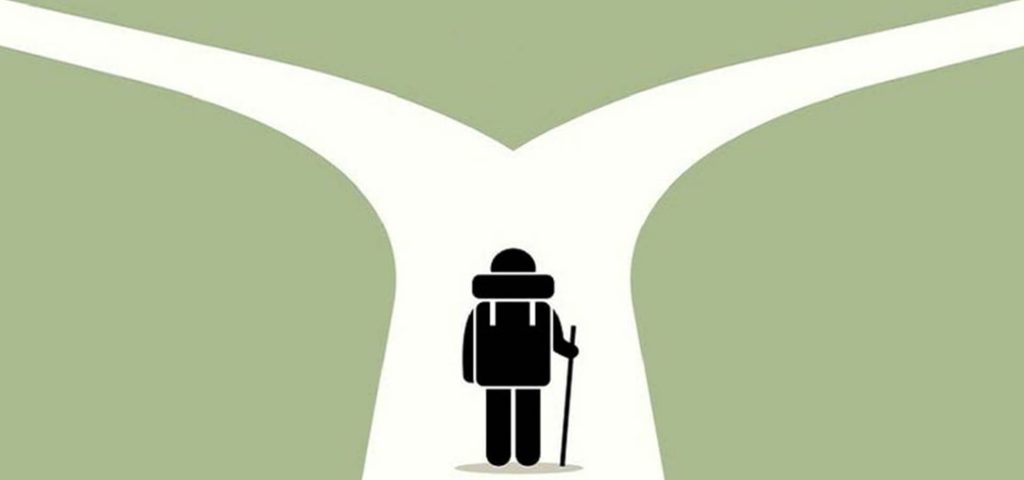
This issue is about decision-making, particularly how we over-think decisions and how we might do better with more gut and less analysis.
Articles:
- How to Make a Big Decision – The New York Times
- Don’t Overthink It – Boston Review
- Optimal Stopping – Brian Christian
- How to Beat Decision Fatigue – Asian Efficiency
- To Win a Sports Bet, Don’t Think Too Much – Scientific American
RECOMMENDED READINGS
1. How to Make a Big Decision
The New York Times (6 min)
Summary
Steven Johnson (@stevenbjohnson) is the author of the “Farsighted: How We Make the Decisions That Matter the Most,” from which this essay is adapted.
Selection
The psychologist Gary Klein has developed a…technique…he calls…a “premortem.” As the name suggests, the approach is a twist on the medical procedure of post-mortem analysis. In a post-mortem, the subject is dead, and the coroner’s job is to figure out the cause of death. In a premortem, the sequence is reversed: “Our exercise,” Dr. Klein explains, “is to ask planners to imagine that it is months into the future and that their plan has been carried out. And it has failed. That is all they know; they have to explain why they think it failed.”
In Dr. Klein’s experience, the premortem has proved to be a much more effective way to tease out the potential flaws in a decision. A whole range of bad cognitive habits — from group think to confirmation bias — tends to blind us to the potential pitfalls of a decision once we have committed to it. It isn’t enough to simply ask yourself, “Are there any flaws here in this plan that I’m missing?” By forcing yourself to imagine scenarios where the decision turned out to be a disastrous one, you can think your way around those blind spots and that false sense of confidence.
2. Don’t Overthink It
Boston Review (14 min)
Summary
A review of the Farsighted, Steven Johnson’s book on decision making. The author considers Johnson’s advice for making good decisions and critiques the idea that we can finally out-think our problems without living into an uncertain future. Sometimes we make the way by walking.
Selection
Now suppose that I could look into a crystal ball and see myself twenty or forty years after the decision to go to college or emigrate or get married or have children. What do I look for to check whether the undertaking was a success? Do I look to see if she is smiling? Or how wealthy my future self is? Those metrics won’t do. Perhaps my future self does not care to smile all the time; and perhaps she’s less interested in wealth than I currently am. These changes in her might have been connected to her finding some happiness that I can’t (yet) fathom.
Looking into the crystal ball would be like watching a movie about someone who looks like me: she will take pleasures in things I don’t now enjoy; she will put great stock in things that are now of little significance to me; she will have knowledge about life generally, and, more specifically, what it is like to live as, say, a mother. I am in no position to assess her life as a success or failure—it is her prerogative to look back at me and think, “How little I knew back then!” What makes big decisions big is that they set into motion changes not only in the outside world, but in ourselves. Becoming a mother means having new desires, feelings, habits, knowledge, and even new decision-procedures.
3. Optimal Stopping
Galleys (16 min)
Summary
How to find the perfect apartment, partner, and parking spot. Excerpted from the author’s book, Algorithms to Live By.
Selection
If you want the best odds of getting the best apartment, spend 37% of your apartment hunt (eleven days, if you’ve given yourself a month for the search) noncommittally exploring options. Leave the checkbook at home; you’re just calibrating. But after that point, be prepared to immediately commit — deposit and all — to the very first place you see that beats whatever you’ve already seen. This is not merely an intuitively satisfying compromise between looking and leaping. It is the provably optimal solution.
We know this because finding an apartment belongs to a class of mathematical problems known as “optimal stopping” problems. And as it turns out, apartment hunting is just one of the ways that optimal stopping rears its head in daily life. Committing to or forgoing a succession of options is a structure that appears in life again and again, in slightly different incarnations. How many times to circle the block before pulling into a parking space? How far to push your luck with a risky business venture before cashing out? How long to hold out for a better offer on that house or car?
4. How To Beat Decision Fatigue
Asian Efficiency (21 min)
Summary
A very practical takedown of the problem of decision fatigue – what it is, where it comes from, and how to fight it.
Selection
You’re frustrated.
Your most difficult tasks never get done.
No matter how hard you work, they linger on your to-do list, suffocating you with guilt and stress.
It isn’t fair. You work as hard as (or harder than) everyone else.
You know what projects are most important.
You scrutinize every minute.
But when it comes time for a tough task, it’s a desperate struggle to get started—much less finish.
And you wonder… is there something you’re missing?
Some mistake that’s crippling your productivity?
Well, yes. There is.
It’s called decision fatigue, and chances are, you’re not doing enough to stop it.
5. To Win a Sports Bet, Don’t Think Too Much
Scientific American (8 min)
Summary
Detailed analysis fogs the future.
Selection
The pattern of performance across the three studies was remarkably consistent: Participants who made general win/lose predictions were reliably better at projecting the winners of the sporting events than those who made specific score predictions.
…It seems that even in cases where greater knowledge may offer an advantage, the act of focusing on that knowledge can disrupt decision-making. Thus, while a lifelong baseball fan is more likely to pick the winning team than someone who has never watched a game, for either person a quick prediction about the winner is likely to be more accurate than one that follows deep reflection.
Whether choosing a jelly bean flavor, rating the attractiveness of a face, or selecting a poster to hang in a room, people are more satisfied with their selection and less likely to change their minds when they make their decisions quickly, without systematically analyzing their options or mulling over the reasons for their choice. The advice is thus the same whether considering complex scenarios or simple situations: Don’t overthink it.
Postscript
Ready. Fire. Aim.
Go with your gut.
Shoot first, ask questions later.
There’s no shortage of pithy advice for making quick decisions. Now there is a growing body of evidence that suggests quick decisions can be better decisions, that we think more clearly when we don’t overthink.
I can believe this is true. I just find it hard to behave in line with it. I struggle with over-analyzing decisions. I wrap myself around the axle, trying to think through every permutation of every possible outcome of every decision. And it makes me miserable. I know I’d be happier if I just made a call and moved on with life.
Optimal stopping is a helpful concept for me. I’ve read research that in decision-making some people are optimizers and others are satisficers. Optimizers look for the optimal answer to a problem or decision. They want the absolute best answer. Satisficers look for a good enough answer, a satisfactory one. It turns out that satisficers tend to be much happier. Optimal stopping, to me, sounds like a way to optimize being a satisficer: figure out the optimal moment to stop considering options and start choosing.
I’ve had people suggest to me (and I’ve suggested to others) that a good way to think about a decision is to imagine how happy you’ll be with it ten years in the future. It’s good advice when you are tempted to only think about how you’ll feel about the decision ten days from now. But projecting that far into the future is awfully difficult. I appreciated the selection from the Boston Review piece because she described so well the ridiculousness of trying to predict how you will feel about a decision in twenty years. How could you possibly know how you’ll feel about where you decided to go to college or whom you decided to marry? As the author concludes, no matter how hard we try to think well about decisions, “we cannot spare ourselves the agony of learning by doing.”
This week, may our decisions be neither rash nor belabored. May we think well but not overthink. And when we stand in the middle of uncertainty, may we have the courage, even then, to make a call.
– Max